

Why Back and Pelvic Pain Gets Worse at Night in Pregnancy: How Supportive Positioning Helps You Sleep
Quick answer: Backache while pregnant and pelvic girdle pain sleeping issues both intensify at night because loosened ligaments, a shifted centre of gravity, and hours of stillness combine to strain the lower back and pelvis. Supportive positioning, a pillow between the knees, under the bump, and behind the back, helps keep hips level and eases nighttime flare-ups.
If you're lying awake wondering why does my back hurt at night when pregnant, you're far from alone. Daytime movement tends to distract from aches, but once you settle into bed, discomfort across the lower spine and pelvis often becomes impossible to ignore. Understanding what's driving this pregnancy back pain at night, and how supportive positioning can help, may be the difference between a restless night and genuinely restorative sleep.
Why Pregnancy Hormones and a Growing Bump Strain the Back
During pregnancy, your body produces hormones that help soften and stretch the ligaments supporting your lower back and pelvis, preparing your body for labour (NHS, Back pain in pregnancy). This natural softening is essential for childbirth, but it also means your joints become less stable than usual.
At the same time, your growing bump shifts your centre of gravity forward.
A review of the evidence notes that hormonal changes, ligament laxity, and increased spinal curvature combine to alter postural balance throughout pregnancy (ResearchGate systematic review). Your lower back muscles work harder all day to keep you upright and balanced, and by the time you lie down, that accumulated fatigue often surfaces as a dull ache or sharp twinge.
Key contributors include:
- Ligament softening, which reduces the stability of the spine and pelvic joints
- Postural changes, as your bump pulls your centre of gravity forward
- Muscle fatigue, built up over a full day of compensating for extra weight
- Reduced overnight movement, which allows pressure to settle in specific areas rather than being redistributed
It's very common to get backache or back pain during pregnancy, according to the NHS, which notes that softened, stretched ligaments can strain the joints of the lower back and pelvis (NHS, Back pain in pregnancy).
Pelvic girdle pain (PGP), sometimes called symphysis pubis dysfunction (SPD), is a related but distinct issue. NHS guidance describes PGP as stiffness of the pelvic joints, or joints moving unevenly at the back or front of the pelvis, estimated to affect up to 1 in 5 pregnant women to some degree (NHS, Pelvic pain in pregnancy). The Royal College of Obstetricians and Gynaecologists confirms the same figure, noting that PGP is usually caused by the pelvic joints moving unevenly, with the extra weight of the baby and changes in posture adding further strain (RCOG, Pelvic girdle pain and pregnancy). Reassuringly, PGP will not harm your baby.
Why Pelvic Pain Flares When You Turn Over in Bed
If how to sleep with pelvic pain in pregnancy is a question keeping you up, you've identified one of the most common PGP triggers. NHS guidance specifically lists turning over in bed, walking, climbing stairs, standing on one leg, and moving your legs apart (such as getting out of a car) as movements that commonly worsen pelvic pain (NHS, Pelvic pain in pregnancy).
Turning over involves a rotational movement through the pelvis, exactly the kind of asymmetric strain that unstable, hormonally-loosened joints struggle to cope with. The RCOG echoes this, noting that PGP symptoms are typically worse with moving the knees apart, rolling over in bed, or standing on one leg (RCOG, Pelvic girdle pain and pregnancy).
A review of lower back support pregnancy research found that pregnancy-related pelvic girdle pain affects between roughly 23% and 65% of women, with around half of all pregnant women experiencing some form of lumbopelvic pain overall (PMC review).
My wife found it a game changer for sleeping. The quality is astonishing and the materials amazing. - Pier P

What the NHS and RCOG Recommend
Both organisations offer broadly consistent self-help advice for managing PGP:
- Put a pillow between your legs for extra support in bed
- Keep your knees together when turning over in bed or getting in and out of a car
- Use a pillow under your bump as well as between your legs
- Change position frequently rather than sitting or lying still for long periods
- Try lying on your less painful side while sleeping
Watching how this looks in practice can help. A short physiotherapy video from Rotunda Hospital Dublin demonstrates positioning in bed for pelvic girdle pain, pillow behind the back, pillow between the knees, another under the knees, and one under the bump, with the shoulder tucked back onto the pillow behind you.
See also - Sleep Like a Baby: Top 12 Pregnancy Tips for a Good Night's Sleep
Supportive Positioning for More Comfortable Nights
Side sleeping in pregnancy is the recommended approach from around 28 weeks onward, with advice to go to sleep on your side (rather than your back) for both overnight sleep and daytime naps, because of links to stillbirth risk when going to sleep on the back in later pregnancy (Stillbirth CRE, sleep position research). Research referenced by the Stillbirth CRE found that over 85% of third-trimester women in a surveyed group settled to sleep on their side, and were more than twice as likely to do so when they'd received this advice. Importantly, both left and right sides are considered equally safe.
The challenge is that side sleeping without support can create its own problems: your top leg drops forward, twisting the pelvis and straining the very joints you're trying to protect. This is where a pregnancy pillow for back pain comes in.
|
Pillow placement |
What it does |
|---|---|
|
Between the knees and ankles |
Keeps hips level and parallel, reducing pelvic rotation |
|
Under the bump |
Takes weight off the abdominal wall, reduces lateral spinal pull |
|
Behind the back |
Provides gentle resistance to rolling onto your back overnight |
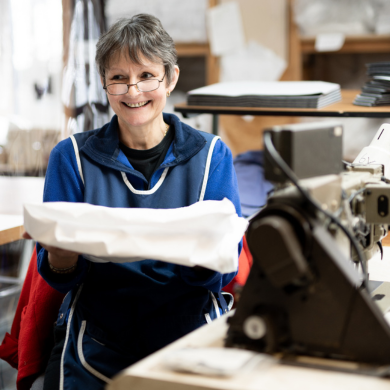
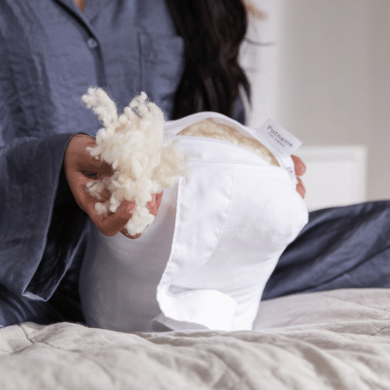
A dedicated pregnancy pillow for back pain can make this setup far easier to maintain through the night than juggling several standard pillows. Putnams, a family-run business handmade in Devon since 1979, offers a range designed around exactly this kind of support:
|
Product |
Best for |
Key feature |
Price |
|---|---|---|---|
|
Targeted support behind the back and under the bump |
Two adjustable pads joined by hook-and-loop fastening, with a removable washable cotton cover |
£83.19 |
|
|
Second and third trimester side sleepers with hip or sciatic discomfort |
Full-length support to hug between the knees and align the hips |
£63.98 |
|
|
Third trimester, reducing the need to reposition multiple pillows |
360° support around the front and back simultaneously |
From £47.58 |
These products are designed to support comfortable positioning, not to treat or cure PGP, think of them as a practical aid alongside the self-help measures recommended by the NHS and RCOG.
Tips for Turning Over in Bed
- Bend your knees up first and keep them pressed together as you roll
- Move as one unit rather than twisting at the waist
- To get out of bed, roll onto your side, then push up with your arms as you swing your legs over the edge
- Give your blood pressure a moment to adjust before standing
A note for partners and family: if you're buying a pregnancy pillow for back pain as a gift, look for one that supports all three key areas; knees, bump, and back, rather than a single-purpose cushion. It's one of the most practical comfort gifts for the second and third trimester.
See also - Choosing the Right Pregnancy & Feeding Cushion
When to Get Support from a Professional
Mild to moderate aches are common, but certain symptoms need prompt attention. The NHS advises contacting your GP or midwife urgently if back pain occurs alongside a fever, vaginal bleeding, pain when peeing, or pain under the ribs on one or both sides, and to call 999 or go to A&E if back pain comes with loss of feeling in your legs, bottom, or genitals (NHS, Back pain in pregnancy). For pelvic pain, the NHS recommends calling your midwife or GP if it's hard to move around, painful to turn over in bed, or painful on the stairs (NHS, Pelvic pain in pregnancy).
|
Symptom |
Action |
|---|---|
|
Severe pain, or pain worsening despite rest and support |
Contact your midwife or GP |
|
Back pain with fever, bleeding, or pain when peeing |
Contact GP/midwife urgently |
|
Loss of feeling in legs, bottom, or genitals |
Call 999 or go to A&E |
|
Persistent PGP affecting daily function |
Ask for a referral to a women's health physiotherapist |
The RCOG notes that early diagnosis and treatment can genuinely relieve PGP symptoms, as they put it, "PGP is not something you just have to 'put up with'" (RCOG, Pelvic girdle pain and pregnancy).
Finding Your Way to Better Rest
Nighttime backache while pregnant and pelvic discomfort stem from real, well-understood changes in your body, softened ligaments, a shifted centre of gravity, and hours of stillness that let pressure build. Supportive positioning won't eliminate every ache, but keeping your hips level with a pillow between the knees, under the bump, and behind the back is a simple, evidence-informed way to make side sleeping more comfortable.
If pain persists or worsens, don't wait it out. Speak to your midwife, GP, or ask about a referral to a women's health physiotherapist. Support is available, and you don't have to manage this alone.
See also - Choosing the Best Pillow for Pregnancy Support
Frequently Asked Questions
Why can't you sleep on your back when pregnant?
From around 28 weeks, going to sleep on your back is linked to a higher risk of complications because of pressure on major blood vessels; side sleeping is the recommended position for both night sleep and naps (Stillbirth CRE).
How common is pelvic girdle pain in pregnancy?
NHS and RCOG guidance both estimate PGP affects up to 1 in 5 pregnant women to some degree.
Does PGP harm the baby?
No. NHS guidance confirms that pelvic girdle pain is not harmful to your baby.
Can a pregnancy pillow cure back or pelvic pain?
No pillow can cure PGP or back pain; these are comfort and positioning aids that support the self-help measures recommended by the NHS and RCOG, such as keeping knees together and using support between the legs and under the bump.
When should I see a physiotherapist?
If pain makes it hard to move around, hurts when turning over in bed, or is painful on stairs, ask your midwife or GP for a referral to an obstetric or women's health physiotherapist.


Von dem Blog
Alle anzeigen



Hinterlassen Sie einen Kommentar