

Night Sweats and Overheating: How Temperature Regulation Disrupts Sleep
Quick Answer: The body needs its core temperature to drop by 1-2°F before sleep can begin. When that process is blocked by hormonal shifts, heat-trapping bedding, or restricted airflow around the head, night sweats and sleep disruption follow. Choosing breathable bedding and cooling pillow fills like wool, buckwheat hulls, or graphite latex can meaningfully reduce waking up hot at night.
Waking at 3 am, drenched and disoriented, is one of the most frustrating sleep problems there is. You kick off the duvet. You flip the pillow. You wait for the heat to pass. Then, just as you drift off again, it happens all over again.
You are far from alone. According to American Family Physician, up to 41% of people report experiencing night sweats within the prior month, with adults between 41 and 55 years most commonly affected. A 2024 survey by UK retailer Dreams found that 37% of British people cite being too hot as the primary reason for disturbed sleep, an 8.1% increase since 2022. These aren't just uncomfortable statistics. Chronic heat-related sleep disruption carries real consequences: impaired memory, weakened immunity, mood instability, and increased daytime fatigue.
The good news is that once you understand the science of temperature regulation during sleep, the solutions become much clearer.
Why Does the Body's Core Temperature Fluctuate Overnight?
Temperature regulation during sleep is not passive. It is an active, tightly orchestrated biological process controlled by the hypothalamus, the brain's internal thermostat.
Roughly two hours before habitual bedtime, the circadian rhythm triggers the body to begin cooling. Core temperature must drop by approximately 1–2°F (0.5–1°C) to signal the pineal gland to release melatonin and initiate sleep. The body achieves this through vasodilation: blood vessels in the hands and feet widen, drawing warmth away from the core and releasing it outward.
If that cooling process is blocked by a warm room, heavy bedding, or inadequate airflow, the body works overtime to compensate. Heart rate stays elevated. The brain remains alert. Sleep onset is delayed, and restorative deep sleep becomes fragmented.
The consequences are measurable. Research published in a peer-reviewed sleep medicine journal found that a deviation of just 1°C from an optimal sleeping climate is associated with a 16% increase in the likelihood of reporting sleep problems, particularly by reducing slow wave sleep (SWS), the deepest, most physically restorative stage.
During REM sleep, the situation becomes even more sensitive. At this stage, the hypothalamus suspends its own internal temperature regulation entirely. The body becomes almost entirely dependent on the external sleep environment to maintain thermal comfort. If the room or bedding is too warm during REM, the brain will trigger waking to prevent overheating. This is why sleeping hot at night so reliably produces fragmented, unrefreshing sleep, even when total hours in bed appear adequate.
The Sleep Foundation and National Sleep Foundation guidelines consistently recommend keeping the bedroom temperature between 60°F and 68°F (15.5°C to 20°C) to support the body's natural cooling process.
What Hormonal Changes Cause Night Sweats During Sleep?
Hormonal fluctuations are among the most common, and most overlooked, causes of night sweats and sleep disruption, particularly for adults in the 40-65 age range.
During perimenopause and menopause, declining oestrogen and progesterone levels narrow the body's "thermoneutral zone", the comfortable temperature range the hypothalamus tolerates before triggering a heat-release response. Minor fluctuations in room or body temperature, ones that would go entirely unnoticed in younger adults, can trigger sudden, intense hot flushes and drenching night sweats. According to the Menopause Society, up to 80% of women transitioning through menopause experience vasomotor symptoms including hot flushes and night sweats, with symptoms persisting for an average of 7 to 10 years. NHS data further indicates that night sweats affect approximately 70% of women during menopause, and The Sleep Charity notes that up to 57% of women suffer from sleep disturbances during perimenopause.
Men are not immune.
Shifts in testosterone levels or thyroid imbalances can trigger similar thermoregulation problems, producing comparable patterns of waking up hot at night. Sleep deprivation itself compounds the issue: poor sleep disrupts the hormonal signalling between the pituitary gland and hypothalamus, the very region that governs body temperature, creating a self-reinforcing cycle of heat and sleeplessness.
How Do Bedding Materials Trap or Release Heat?
Not all bedding behaves the same way once body heat builds beneath the covers. The table below illustrates the key differences between common fill materials:
|
Material |
Breathability |
Moisture-Wicking |
Heat Retention |
Best For |
|---|---|---|---|---|
|
Low |
Poor |
High |
General support, cooler climates |
|
|
Polyester/synthetic fills |
Low |
Poor |
High |
Budget use only |
|
High |
Excellent |
Low |
Hot sleepers, night sweats |
|
|
Very High |
Good |
Very Low |
Hot sleepers, night sweats |
|
|
High |
Good |
Low |
Hot sleepers, general support |
|
|
Cotton covers |
High |
Good |
Low |
General use |
Standard memory foam is dense and synthetic. It contours well, but acts as an insulator, trapping expelled body heat directly against the skin. Synthetic polyester bedding compounds the problem further. As one sleep expert put it, polyester effectively "wraps the body in plastic," restricting airflow and preventing sweat from evaporating.
Natural fills behave very differently.
British wool actively manages the microclimate around the body, wicking moisture away and releasing it as vapour rather than trapping it. Organic buckwheat hulls create a highly porous support structure; air circulates freely between the hulls, preventing heat from accumulating around the head. Graphite latex, derived from natural plant sources, offers responsive support with significantly less heat retention than synthetic foam alternatives.
Research published in the Indian Journal of Science and Technology (Yim, 2015) found that pillows which mould tightly around the head and neck "decrease air circulation and prevent thermal dissipation to the surroundings, ultimately increasing the temperature of the pillow." In other words, the very comfort that dense foam seems to offer initially is working against your body's need to stay cool through the night.

Why Is the Head and Neck So Important for Heat Dissipation During Sleep?
The head functions as a primary thermal radiator.
A significant proportion of the body's heat is released through the scalp and face during sleep, which is why the surface your head rests on matters far more than most people realise.
When a dense pillow wraps tightly around the head, it insulates this radiator rather than allowing heat to disperse. The result is a localised increase in temperature that the hypothalamus registers as a threat, potentially interrupting or fragmenting deep sleep stages. For those already managing hormonal night sweats or chronic overheating in bed, this restriction of airflow around the head acts as an accelerant.
Cooling pillow overheating solutions work precisely because they restore airflow to this critical zone. A pillow with a breathable, open-structure fill, such as wool or buckwheat, allows warmth to dissipate naturally rather than accumulating beneath the head, supporting the body's own thermoregulatory process rather than working against it.
See also - Hot Flushes Sleep Solutions - Best Cooling Bedding for Night Sweats
Choosing Breathable Support for Cooler, Deeper Sleep
The most direct way to support healthy temperature regulation sleep is to replace heat-trapping bedding materials with breathable, natural alternatives. Here at Putnams, we offer a range of natural pillows specifically designed for this purpose, each filled with materials that regulate temperature, wick moisture, and allow airflow where it is needed most.
Key Putnams Natural Pillows for Hot Sleepers
- Organic Buckwheat Hull Pillow: The individual hulls create a highly breathable support structure with exceptional airflow. Buckwheat hulls are naturally impressive dissipators of heat, making this pillow an outstanding choice for those waking up hot at night or managing hormonal night sweats. Adjustable fill allows personalised loft. 100% cotton cover.
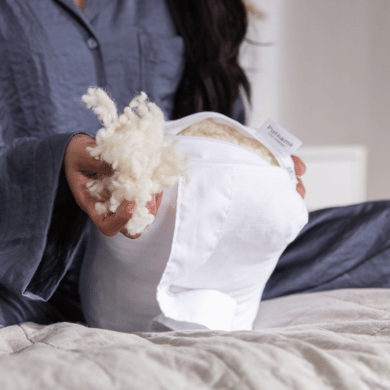
- Height Adjustable British Wool Pillow: British wool actively manages moisture and temperature, keeping sleepers cool when warm and warm when cool. Naturally hypoallergenic, anti-dust mite, and OEKO-Tex Standard 100 certified. 100% cotton cover.
- Graphite Latex Pillow – Natural, Cooling & Supportive. A natural plant-based alternative to synthetic foam. Graphite latex offers responsive support with notably lower heat retention, making it well-suited to hot sleepers who want both comfort and temperature control. 100% cotton, undyed, unbleached cover.
- Graphite Latex Pillow & Wool Duvet Set Bundle: Combines a graphite latex pillow with a breathable bedding sleep system in British wool for a fully temperature-regulating sleep environment. From
All of our natural pillows are handmade in the UK, free from unnecessary chemicals, and covered in unbleached, undyed 100% cotton, itself a breathable bedding sleep material that enhances airflow and hygiene. With over 8,600 verified reviews, the range carries a strong track record across a wide age group.
See also - Hot Flushes Sleep Solutions - Best Cooling Bedding for Night Sweats
Simple Steps to Stop Waking Up Sweating at Night
Addressing night sweats sleep disruption does not require a complete bedroom overhaul. A targeted, layered approach consistently produces the clearest results:
- Set the bedroom between 16°C and 20°C. The optimal sleeping temperature supported by the Sleep Foundation and National Sleep Foundation guidelines. Cooler environments also increase melatonin production, making sleep onset faster and more reliable.
- Switch to a breathable pillow fill. Replace dense synthetic foam with British wool, organic buckwheat hulls, or graphite latex to restore airflow around the head and neck.
- Choose natural fibre bedding: 100% cotton or wool covers and sheets wick moisture rather than trapping it. Avoid thick polyester layers.
- Avoid alcohol, caffeine, and spicy food before bed. Each raises core body temperature, narrowing the thermoneutral zone and increasing the likelihood of night sweats.
- Consult a GP if symptoms are frequent or severe. Persistent night sweats can signal underlying hormonal or medical causes. Hormone therapy, thyroid management, or other clinical interventions may be appropriate alongside environmental adjustments.
For most people, the combination of a cooler room and a genuinely breathable bedding sleep system, starting with the pillow, produces a meaningful and noticeable improvement within days.
See also - Best Bedding Options for Hot Sleepers
Frequently Asked Questions
Why do I overheat when I sleep even if the room feels cool?
Overheating during sleep can occur even in a cool room when heat-trapping bedding, such as synthetic foam pillows or polyester duvets, prevents the body from releasing warmth efficiently. Hormonal changes, particularly during perimenopause and menopause, can also narrow the thermoneutral zone, making the body far more reactive to small temperature shifts. Switching to breathable bedding made from natural fills is often the most effective first step.
What is the best pillow for night sweats and hot sleepers?
The best pillow for night sweats and hot sleepers is one filled with a naturally breathable material that allows heat to dissipate rather than accumulate. Organic buckwheat hulls provide exceptional airflow due to their open-hull structure. British wool wicks moisture actively. Graphite latex offers cooling resilience without the heat retention of standard foam. We offer all three options here.
What bedroom temperature is best to reduce night sweats?
Sleep Foundation and National Sleep Foundation guidelines recommend keeping the bedroom between 60°F and 68°F (15.5°C to 20°C). Cooler ambient temperatures support the body's pre-sleep core temperature drop, encourage melatonin release, and reduce the frequency of waking up hot at night, particularly for those experiencing hormonal night sweats.
How do hormonal changes cause night sweats during sleep?
Declining oestrogen and progesterone levels during perimenopause and menopause disrupt the hypothalamus's ability to regulate the thermoneutral zone. Minor temperature increases, ones that would not affect younger adults, trigger disproportionately large heat-release responses: hot flushes and drenching night sweats. According to the Menopause Society, up to 80% of women in menopause experience these vasomotor symptoms, which can persist for 7–10 years.
Can my pillow really make a difference to night sweats and overheating?
Yes. Research published in the Indian Journal of Science and Technology found that pillows which mould tightly around the head reduce air circulation and prevent thermal dissipation, directly raising the temperature of the sleep surface. Choosing a cooling pillow with an open, breathable fill restores airflow to the head and neck, one of the body's primary heat-release zones, and can meaningfully reduce the intensity and frequency of sleeping hot at night.
When should I see a doctor about night sweats?
Seek medical advice if night sweats are frequent, drenching, or accompanied by other symptoms such as unexplained weight loss, persistent fever, fatigue, or pain. These can indicate underlying medical conditions, including hormonal imbalances, thyroid disorders, or, in rare cases, lymphoma. Environmental adjustments help the majority of hot sleepers, but persistent or severe symptoms warrant a clinical assessment.


Von dem Blog
Alle anzeigen




Hinterlassen Sie einen Kommentar